- What are volleyball drills for defense?
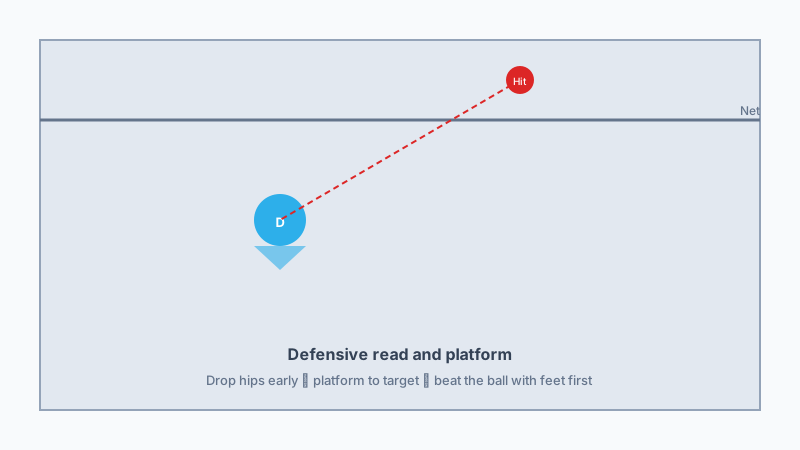
- Volleyball drills for defense train posture, digging platform, reading hitters, and recovering to base after contact. Start with Pepper, Wall Digs, and Down Ball Dig, then add Read and Dig Lines and transition games. The same progressions cover searches for volleyball drills defense.
- What are volleyball drills digging coaches should run?
- Wall Digs for solo volume, Down Ball Dig for platform under a controlled attack, One Contact Save Challenge for pressure, and Sprawl and Recover Circuit for movement. Digging is a subset of defense: hard-driven contacts with less setup time than a pass.
- What are the best volleyball drills for beginners to learn defense?
- Start with Pepper, Wall Digs, and Down Ball Dig. All three build platform control and low posture without advanced reads. Keep ball speed low and reps high before introducing decision-making.
- How do you teach digging technique to youth players?
- Focus on posture first: knees bent, hips low, arms extended with a flat platform. Use tossed balls or slow downballs before progressing to live attacks. Cue players to "get your belly button behind the ball" rather than reaching with their arms. The One Contact Save Challenge is a good entry point.
- What volleyball drills improve ball control?
- Pepper is the most time-tested ball control drill. Wall Digs and the Sprawl and Recover Circuit add volume and movement. For more advanced players, the Tip or Rip Decision Drill trains reading under pressure, not just static contact.
- How long should defense drills take in a practice?
- A focused defense block typically runs 15–25 minutes. Start with a ball-control warm-up (5 minutes), move to a reading or positioning drill (8–10 minutes), and finish with a competitive game-situation drill. Avoid more than 30 minutes in one block; attention drops.
- What's the difference between a dig and a pass in volleyball?
- A pass is a controlled contact off a serve (serve receive) using the forearm platform. A dig is a defensive contact off an opponent's attack, usually harder-driven and with less time to set up. The technique overlaps, but digs require faster reads and often demand a wider range of body positions (sprawl, dive, one-arm).