- What are volleyball drills for passing?
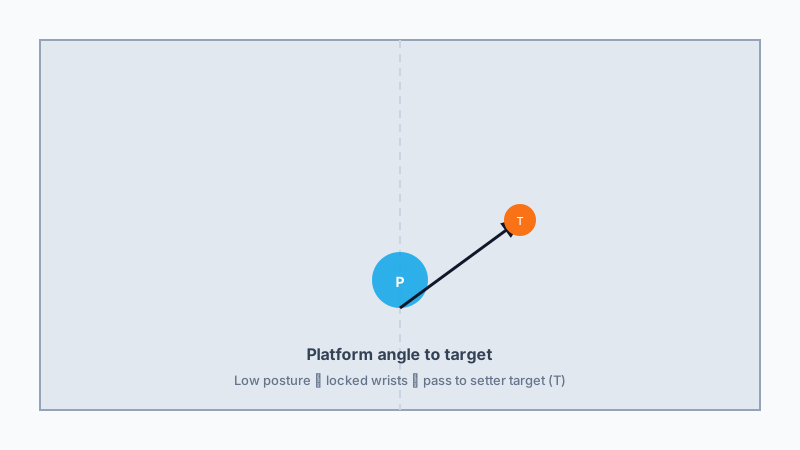
- Volleyball drills for passing build platform shape, footwork to the ball, and directional ball control off tossed or easy feeds. Start with Wall Passing and Partner Passing, then Platform Angle Ladder and Passing Lanes. Live-serve first contact, butterfly, and formations live on the serve-receive hub.
- What are volleyball drills passing coaches should run first?
- Wall Passing, Partner Passing, and Platform Angle Ladder. Those three lock contact and angle before any serve-receive formation. Add Passing Lanes and Ball Control Circle Target once stationary platforms are consistent.
- What volleyball drills improve ball control?
- Wall Passing, Partner Passing, Ball Control Circle Target, and Three-Touch Ball Control Shuttle. Ball control here means a stable platform and a setter target off controlled feeds, not digs under a hard attack (those live on the defense hub).
- What are volleyball footwork drills for passing?
- Passing footwork drills train getting the body behind the ball before contact: Partner Passing with left/right tosses, Platform Angle Ladder, Passing Lanes, and coach-fed lines where the passer must move, plant, then pass. Feet first, then arms. Blocking footwork lives on the blocking hub.
- What are the best volleyball passing drills for beginners?
- Wall Passing and Partner Passing are the best starting points. Both build platform technique and contact consistency without requiring serves or complex setups. Once players can make 20 consecutive clean contacts, progress to Platform Angle Ladder to add directional control.
- How is passing different from serve receive?
- Passing drills build platform mechanics and ball control off a toss or easy feed. Serve receive drills add a live serve, 0–3 ratings, butterfly patterns, and formations. Build the platform here, then move to the serve receive drills page for live serves.
- How do you teach serve receive to youth players?
- Start here without a server: coach-tossed balls for platform and footwork. Once players are comfortable, open the serve-receive hub for Short-Court Serve Bridge, then Butterfly and ratings. Do not jump straight to full-court live serves.
- What's the difference between a pass and a dig in volleyball?
- A pass is a controlled forearm contact off a serve or easy feed, you have time to read and set up. A dig is a defensive contact off an opponent's attack, usually harder-driven with less reaction time. For digging drills, see our defense drills page.
- How many touches per player should a passing drill have?
- Aim for 30–50 quality touches per player in a 10-minute passing block. Structure drills so players are actively passing at least 60% of the time, not standing in line waiting. Partner drills and small-group formats maximize touch count.
- How do you run live-serve work with a small team?
- Use the serve-receive hub: a 2-passer system, Short-Court Serve Bridge, or Triples Serve-Receive Competition. Keep this page for platform and ball control so the two hubs do not compete for the same queries.