Last updated: September 23, 2026
Where can I find volleyball practice plans? Download free blank PDF templates and open filled first-day, 60-, 90-, and 120-minute examples. Create practice plans in seconds in SoloCoach when you want timed drills on your phone. For the planning method only, use the how-to guide.
Volleyball Practice Plans
Free blank volleyball practice plan templates (PDF) plus filled first-day, beginner, club, and serve-and-pass examples.
What a Volleyball Practice Plan Should Include
A strong plan is simple: one clear theme, a realistic timeline, and drill choices that match your team's current level. Every session should cover five blocks:
- Warm-up (10–15 min): movement prep and high-touch ball control
- Primary skill block (20–25 min): the highest-priority technical focus for the day
- Secondary block (15–20 min): support skill linked to the same theme
- Game-like play (15–20 min): score pressure and decision-making under live conditions
- Closeout (10–15 min): scrimmage, recap, and one action item for the next session
When your practice plan aligns with clear coaching priorities, sessions feel focused and easier to run. Skill emphasis, repetition, and adjustment from match feedback matter more than novelty when it comes to player development.
How to use this template
- Pick the 60-, 90-, or 120-minute layout that matches your gym time.
- Keep the five-block clock and swap only the drills that match today's theme.
- Need the method first? How to plan a volleyball practice walks through problem → one focus → drills.
Download Free Volleyball Practice Plan Templates
Printable blank PDFs for 60-, 90-, and 120-minute volleyball practice plans you can fill before each session. Print a blank, write your theme and drills, then take it to the gym.
From the makers of SoloStats
Create practice plans in seconds with SoloCoach
Pull drills from the library, build a timed volleyball practice plan in minutes, and run it drill by drill with a countdown timer.
Create practice plans in seconds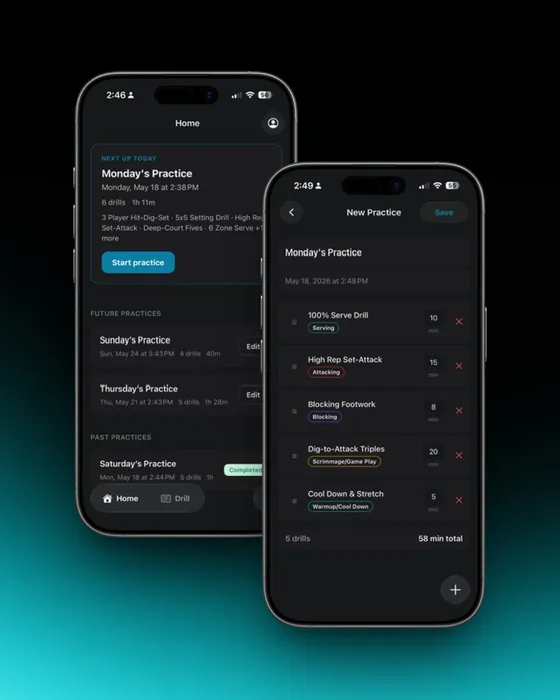
60-Minute Volleyball Practice Plan
Best for shorter gym windows, younger teams, or days when you need a focused session. Cut the secondary block and go straight from primary skill work into competition. For day one with a brand-new roster, use the first-day filled plan instead.
0–8 min · Warm-up
Dynamic movement + Two-Ball Warm-Up Pepper
Fast start and communication
8–25 min · Primary skill focus
Coach-Fed Platform Passing
Keep quality high and transitions quick
25–42 min · Secondary focus
Short-Court Serve and Receive
First-contact confidence
42–60 min · Competitive finish
3v3 Half-Court Game
Compete with one tracked team KPI
| Time | Block | Drill or Activity | Notes |
|---|---|---|---|
| 0–8 | Warm-up | Dynamic movement + Two-Ball Warm-Up Pepper | Fast start and communication |
| 8–25 | Primary skill focus | Coach-Fed Platform Passing | Keep quality high and transitions quick |
| 25–42 | Secondary focus | Short-Court Serve and Receive | First-contact confidence |
| 42–60 | Competitive finish | 3v3 Half-Court Game | Compete with one tracked team KPI |
90-Minute Volleyball Practice Plan
The standard format for most club and high school programs. Five blocks give you enough time for two focused skill segments, a competitive drill, and full scrimmage.
0–10 min · Warm-up
Dynamic movement + Continuous Pepper
Build touch and communication
10–30 min · Primary skill block
Pass-and-Freeze + Coach-Fed Platform Passing
High-repetition technical work
30–50 min · Secondary skill block
Target Serving + Butterfly Passing
Add accuracy and movement pressure
50–70 min · Game-like segment
3v3 Half-Court + Serve Receive Starter Game
Decision quality under light pressure
70–90 min · Scrimmage + review
Modified 6v6 + quick recap
Close with one clear weekly focus
| Time | Block | Drill or Activity | Notes |
|---|---|---|---|
| 0–10 | Warm-up | Dynamic movement + Continuous Pepper | Build touch and communication |
| 10–30 | Primary skill block | Pass-and-Freeze + Coach-Fed Platform Passing | High-repetition technical work |
| 30–50 | Secondary skill block | Target Serving + Butterfly Passing | Add accuracy and movement pressure |
| 50–70 | Game-like segment | 3v3 Half-Court + Serve Receive Starter Game | Decision quality under light pressure |
| 70–90 | Scrimmage + review | Modified 6v6 + quick recap | Close with one clear weekly focus |
2-Hour Volleyball Practice Plan
For teams with longer gym time, club tournaments prep, pre-season intensives, or programs that practice fewer days per week and need to cover more ground per session.
0–15 min · Warm-up
Dynamic movement + Continuous Pepper + individual ball handling
Full body activation and ball feel
15–40 min · Primary skill block
Coach-Fed Platform Passing + Pass-and-Freeze
Technical fundamentals at high reps
40–60 min · Secondary skill block
Target Serving + Butterfly Passing
Accuracy and first-contact pressure
60–80 min · Positional / team systems
6-rotation serve receive walk-through + transition offense
Alignment and communication reps
80–100 min · Game-like competition
Wash drill or controlled 6v6 with scoring conditions
Live-ball decision-making under pressure
100–120 min · Scrimmage + closeout
Full 6v6 scrimmage + team recap
End with one key focus for the next practice
| Time | Block | Drill or Activity | Notes |
|---|---|---|---|
| 0–15 | Warm-up | Dynamic movement + Continuous Pepper + individual ball handling | Full body activation and ball feel |
| 15–40 | Primary skill block | Coach-Fed Platform Passing + Pass-and-Freeze | Technical fundamentals at high reps |
| 40–60 | Secondary skill block | Target Serving + Butterfly Passing | Accuracy and first-contact pressure |
| 60–80 | Positional / team systems | 6-rotation serve receive walk-through + transition offense | Alignment and communication reps |
| 80–100 | Game-like competition | Wash drill or controlled 6v6 with scoring conditions | Live-ball decision-making under pressure |
| 100–120 | Scrimmage + closeout | Full 6v6 scrimmage + team recap | End with one key focus for the next practice |
Free Filled Practice Plans
Prefer a ready-to-run session? Each filled example names every drill with setup, steps, and coaching cues, the artifact searchers want for “volleyball practice plan.”
Completed 75-Minute Example Plan
Use this as a plug-and-play model for a beginner-heavy session. Every drill links to a full explanation you can review before practice.
- 0–10: Continuous Pepper + movement prep
- 10–25: Coach-Fed Platform Passing
- 25–40: Pass-and-Freeze with target scoring
- 40–52: Target Serving progression
- 52–65: Short-Court Serve and Receive (see passing drills)
- 65–75: 3v3 Half-Court competitive finish
Build this exact structure digitally and save it as your weekly template using SoloCoach.
How to Adjust Your Plan by Age Group
The five-block structure works at every level. What changes is block length, drill complexity, and how much court you use.
Youth / 10U–12U
- 60-minute sessions max
- 8–10 min blocks with frequent breaks
- Half-court or badminton-court drills
- Prioritize beginner drills with high ball contacts
- Day one: first-day plan · youth fill: 60-minute beginner
- Skip rotational systems, focus on ball control and fun
Junior High / 14U
- 75–90 minute sessions
- 12–15 min skill blocks
- Introduce positional concepts and simple plays
- Use drills that add decision-making
- Short scrimmage with 1–2 tracked stats
Weekly Practice Planning Rhythm
Rotate your themes across the week so each skill gets focused time without rebuilding your plan from scratch. Here is a sample three-day rotation:
| Day | Theme | Primary Block | Secondary Block |
|---|---|---|---|
| Monday | Ball control | Passing drills | Serve receive |
| Wednesday | Offense | Hitting drills | Setting drills |
| Friday | Defense + systems | Defense drills + Blocking | Team scrimmage |
After each match, review your team statistics and adjust the next week's themes based on what the numbers show.
Choosing Drills for Each Block
Start with clear objectives, then match drills to those goals. If you're working with newer players, focus on beginner volleyball drills that build ball control and fundamentals. The key is selecting a small, reliable set rather than constantly introducing new ideas.