What is the 180-Shuttle Passing volleyball warmup drill? 180-Shuttle Passing is a half-court volleyball warmup across the net. A player receives a toss, passes the ball straight up to themselves, rotates 180° while the ball is in the air, then sends an overhead pass back over the net. Players shuttle into waiting lines so the group gets high-rep ball control, movement, communication, and reverse overhead passing.
ThatCoachKai drill
180-Shuttle Passing Volleyball Warmup Drill
High-rep shuttle warmup: pass to self, spin 180°, send it back overhead
- Players
- 6+ per half (2 on court + waiting lines)
- Equipment
- Net, 1 ball per group
- Time
- 6–10 min
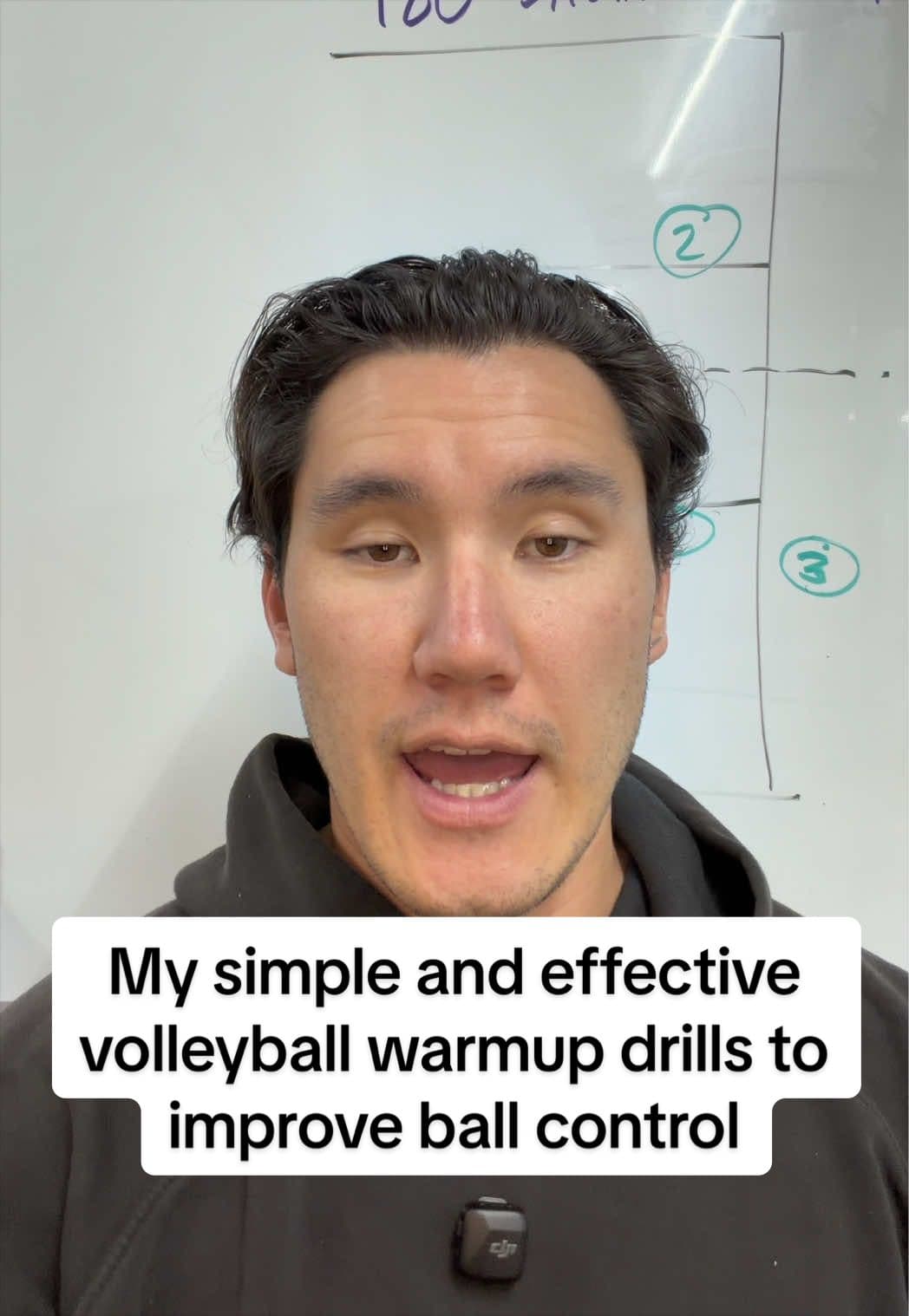
Watch the demo
Full walkthrough of the 180° self-pass shuttle and the race-to-ten progression.
 Play demo
 Watch on Instagram
 Watch on TikTok
Setup
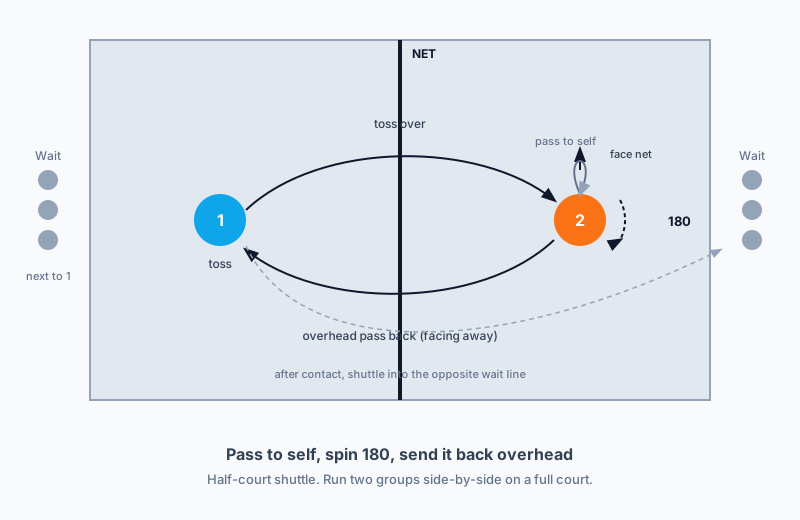
Half-court shuttle across the net: one initiator and one passer on court, with waiting lines on both sides. You can run two groups side-by-side on a full court.
How to run 180-Shuttle Passing
- Set half court (or two half-court groups on one full court). Put player 1 on one side of the net and player 2 on the other, with waiting lines off the court on both sides.
- Player 1 initiates with a toss over the net to player 2.
- Player 2 forearm-passes the ball straight up to themselves. While the ball is in the air, they rotate 180° so they finish facing away from the net.
- Facing away, player 2 passes the ball overhead back over the net to the opposite side.
- As the ball travels, the next waiting player on player 1's side steps on. Player 1 shuttles off into the waiting line on the far side.
- The new on-court player receives the overhead pass the same way: pass to self, spin 180°, send it back. Keep the shuttle looping.
Race and pace progression
- Once the pattern is clean, put one half-court group against the other and race to 10 successful over-the-net returns.
- Racing usually drops pass height and speeds the ball up. That is the point: lower, faster balls raise the difficulty for everyone.
- If quality collapses, kill the race and rebuild centered self-passes before you score again.
Why 180-Shuttle Passing works
Most warmups never train overhead reverse passing. In out-of-system chaos you chase a ball and have to send it back over your head. If you never practice it, you will not be good at it.
Watch for
- First contact stays on top of the passer so they can turn under the ball
- Full 180° turn while the self-pass is in the air, then a controlled overhead pass back
- Waiting players step on before the ball returns so the shuttle does not die
- Clear calls so two half-court groups do not collide mid-court
Common failure
The self-pass drifts off the body, so the turn becomes a scramble and the overhead pass floats short. Reset: demand a high, centered self-pass, then turn under it before you send it back.
Coaching cues
- Control the first pass onto yourself. Anywhere around you kills the turn.
- Overhead reverse passing is the skill. Treat it like a contact you will need in chaos, not a novelty.
- Communication keeps the shuttle alive. Call who is on before the ball comes back.
- High velocity, high reps. Keep lines moving so nobody stands cold.
180-Shuttle Passing FAQ
- What is a good volleyball warmup for overhead reverse passing?
- 180-Shuttle Passing is built for that: a centered self-pass, a full 180° turn under the ball, and an overhead send-back over the net, with continuous shuttle rotation so the whole group gets reps.
- How many players do you need for 180-Shuttle Passing?
- Six or more per half court works well: two on the court plus waiting lines on both sides. On a full court you can run two groups at once. With fewer players, shorten the lines and keep the same shuttle pattern.
- Why practice passing the ball backwards over your head?
- Out-of-system and chaos plays often force you to chase a ball and send it over your head to a teammate or back over the net. If that contact never shows up in warmup, players freeze when it shows up in a rally.
- How do you make 180-Shuttle Passing more competitive?
- Race one half-court group against the other to ten clean returns. Players will pass lower and faster, which raises the difficulty. Reset to cooperative tempo if platforms fall apart.