What is the Hourglass volleyball warmup drill? Hourglass is a four-line volleyball passing warmup across the net. Players toss and forearm-pass in a continuous loop, then rotate into the next line so the whole team gets movement, communication, and high-rep platform work in the first minutes of practice. Add a second ball once the single loop is clean.
ThatCoachKai drill
Hourglass Volleyball Warmup Drill
Four-line passing warmup for ball control and communication
- Players
- 8+ (four lines)
- Equipment
- 1 ball (add a second for the progression)
- Time
- 8–12 min
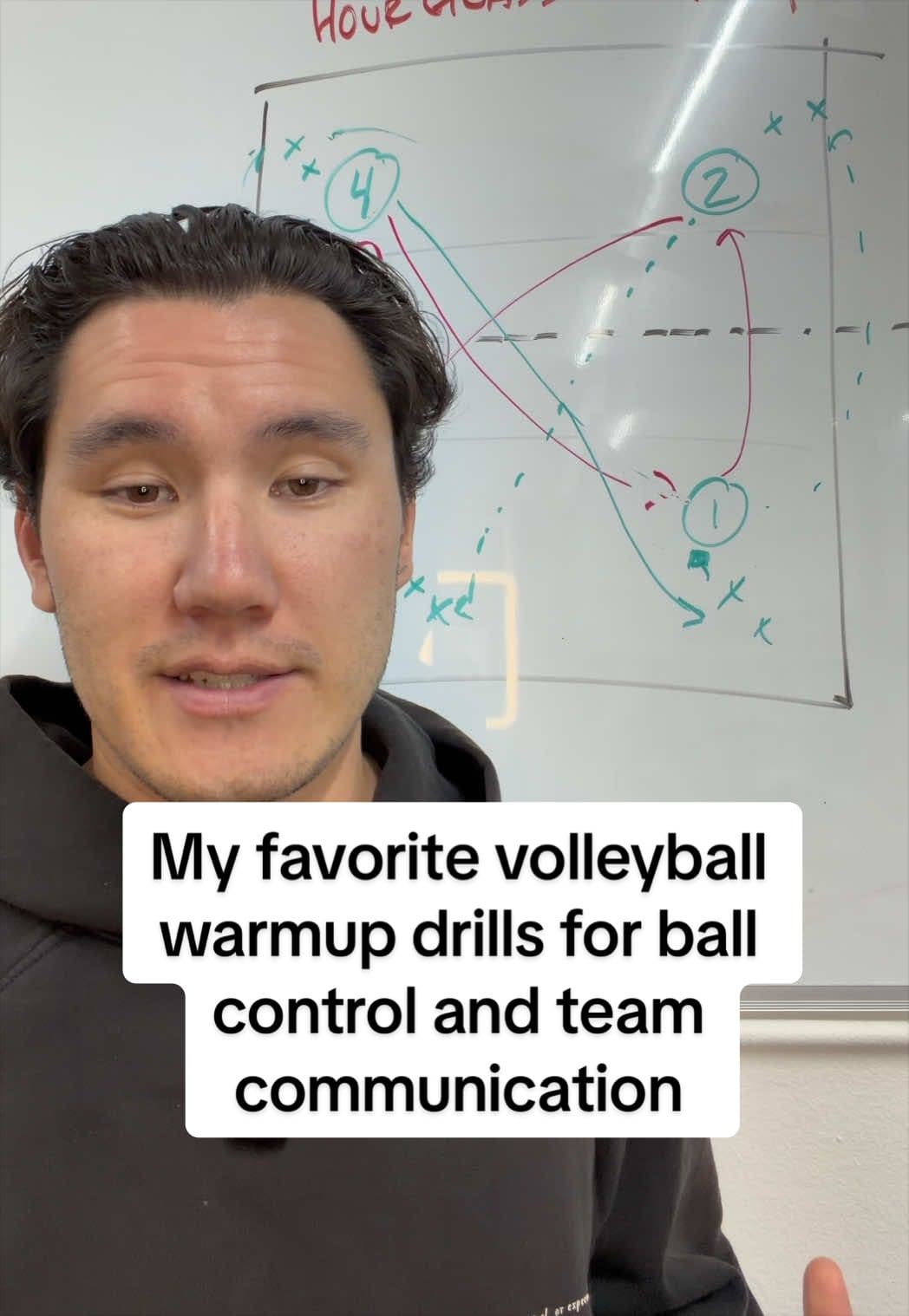
 Watch on Instagram
 Watch on TikTok
Setup
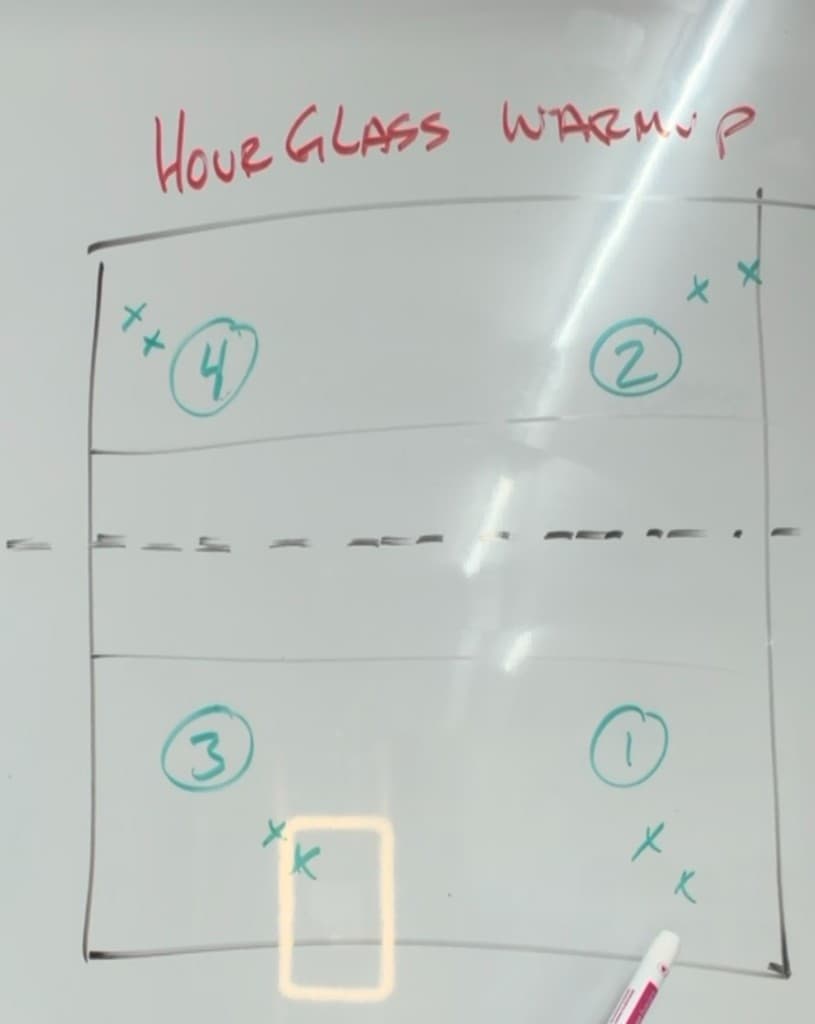
Four lines on the court, one primary player at each spot with a line behind them. The shape looks like an hourglass across the net.
How to run Hourglass
- Form four lines at the hourglass spots: two on each side of the net, offset so the pass paths cross diagonally.
- Player 1 initiates with a toss over the net to player 2.
- Player 2 forearm-passes diagonally across the net to player 3.
- Player 3 passes to player 4; player 4 passes back to the next player in line 1.
- After each contact, that player leaves the court and joins the line they just passed toward. The next person in their old line steps up immediately.
- Keep one ball looping until the gym is warm and the pattern is clean.
Two-ball Hourglass progression
- Start the same way: ball A from 1 to 2.
- At the same time, initiate ball B from 3 to 4 so both balls travel in the same direction around the hourglass.
- Both balls should start on the same side of the net so they chase each other around the loop instead of colliding head-on.
- Demand timing and communication: call the ball, clear the spot, and step on without freezing the second ball.
Why Hourglass works
You need a high-velocity volleyball warmup that stacks passing reps, movement, communication, and court awareness in the first minutes of practice, not a static partner pass that leaves half the gym cold.
Watch for
- Players follow the ball into the next line after every contact
- Clear calls before they step on so lines do not collide
- Toss quality from player one: a catchable initiation, not a rocket
- On two balls: both start on the same side so the loops stay in sync
Common failure
Lines stop rotating or two players occupy the same spot. That is usually a communication miss, not a passing miss. Pause, reset the four primaries, and restart with louder calls.
Coaching cues
- This should feel easy with one ball. If it does not, fix platform basics and talking before you add the second ball.
- Follow the ball into the next line. Standing still after a pass kills the drill.
- It is an awareness drill and a communication drill first. Passing quality rides on those two.
- Two balls are the fun layer. Earn them with a clean single-ball loop.
Hourglass FAQ
- What is a good volleyball warmup passing drill for a full team?
- Hourglass is built for that: four lines across the net, continuous forearm passing, and constant rotation so most of the roster is moving and talking instead of waiting in a partner line.
- How many players do you need for the Hourglass drill?
- Eight or more works best so each of the four spots has a primary and a line. With fewer players, shorten the lines and keep the same four-spot geometry.
- When should I add a second ball to Hourglass?
- Only after one ball looks easy: clean platforms, loud communication, and automatic rotation into the next line. If the single loop is messy, the second ball will just create collisions.
- Is Hourglass only a volleyball passing drill?
- Passing is the contact, but the drill also trains awareness and communication. Players who only chase a perfect platform and forget to talk will run into each other.